Technology 2.0: Mapping
Technology 2.0: Mapping Presentation
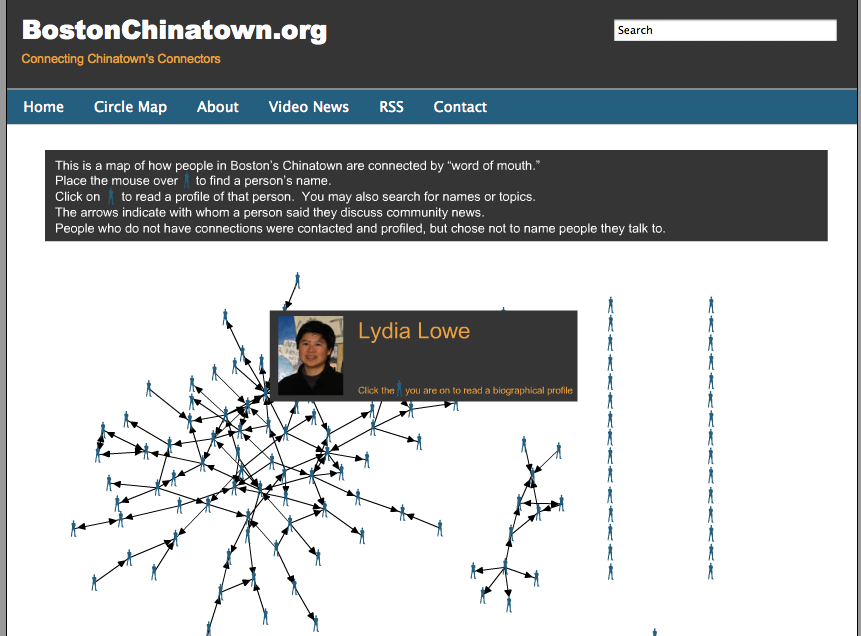
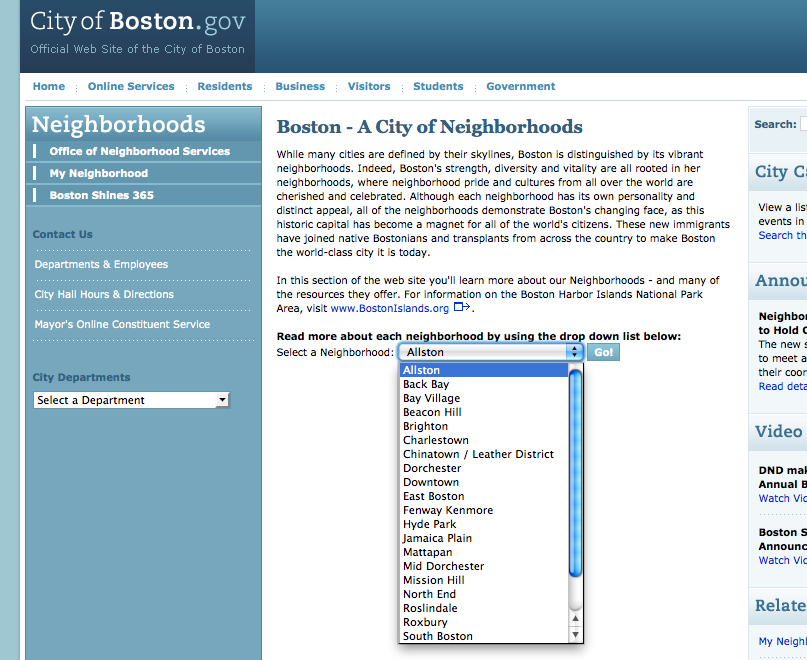
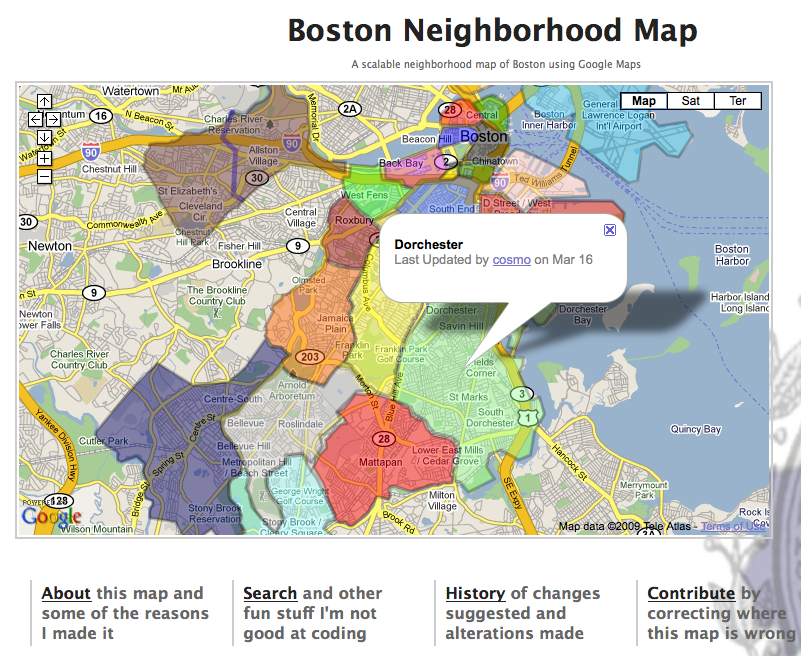
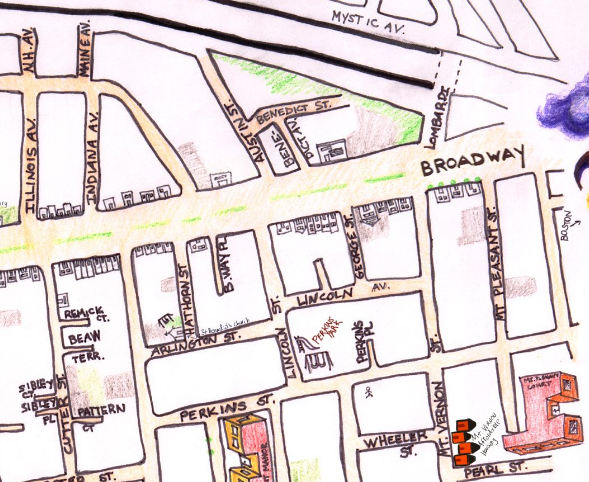
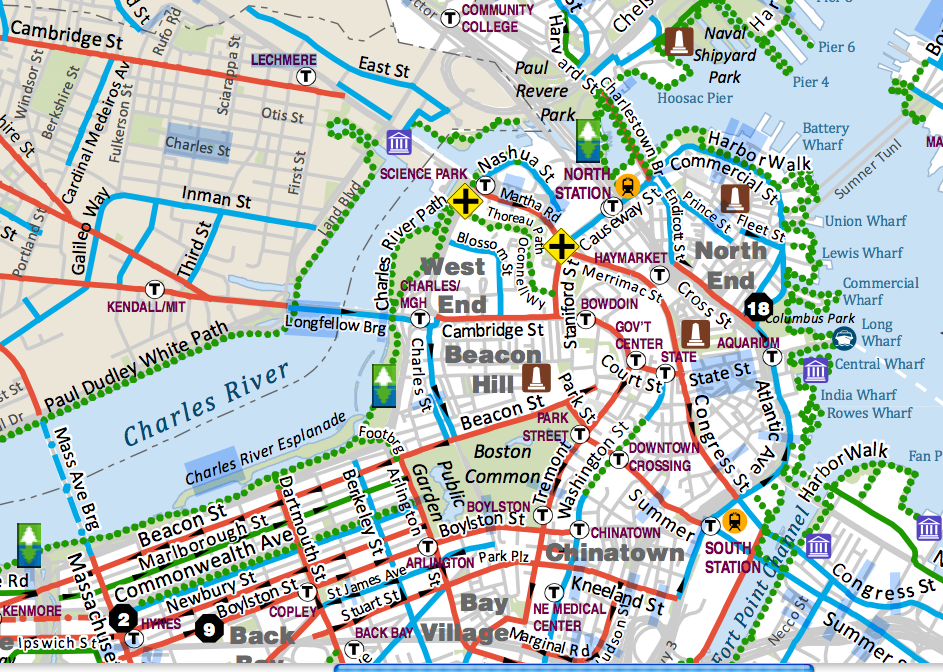
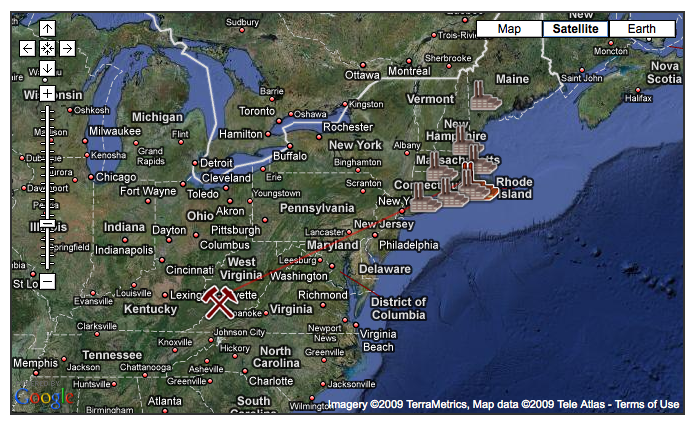
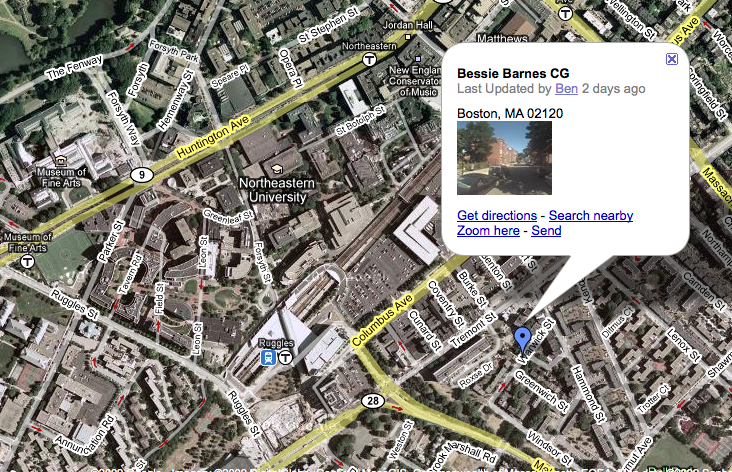
On Saturday I presented on Mapping at the Technology 2.0 community summit convened by the Organizers Collaborative (I’m chairperson of the board), Boston Neighborhood Network (the local cable access TV station) and the John O’Bryant African American Institute. I had 10 minutes to…
introduce the technology (mapping) with a very short description and reference to particular brand names (if that helps)
say how they use it and why it works for their purposes (“I use google maps to…”)
demonstrate online (if this helps)
provide a sense of how this technology is changing or has changed the world (i.e. why people should care about learning this tech).
wrap up
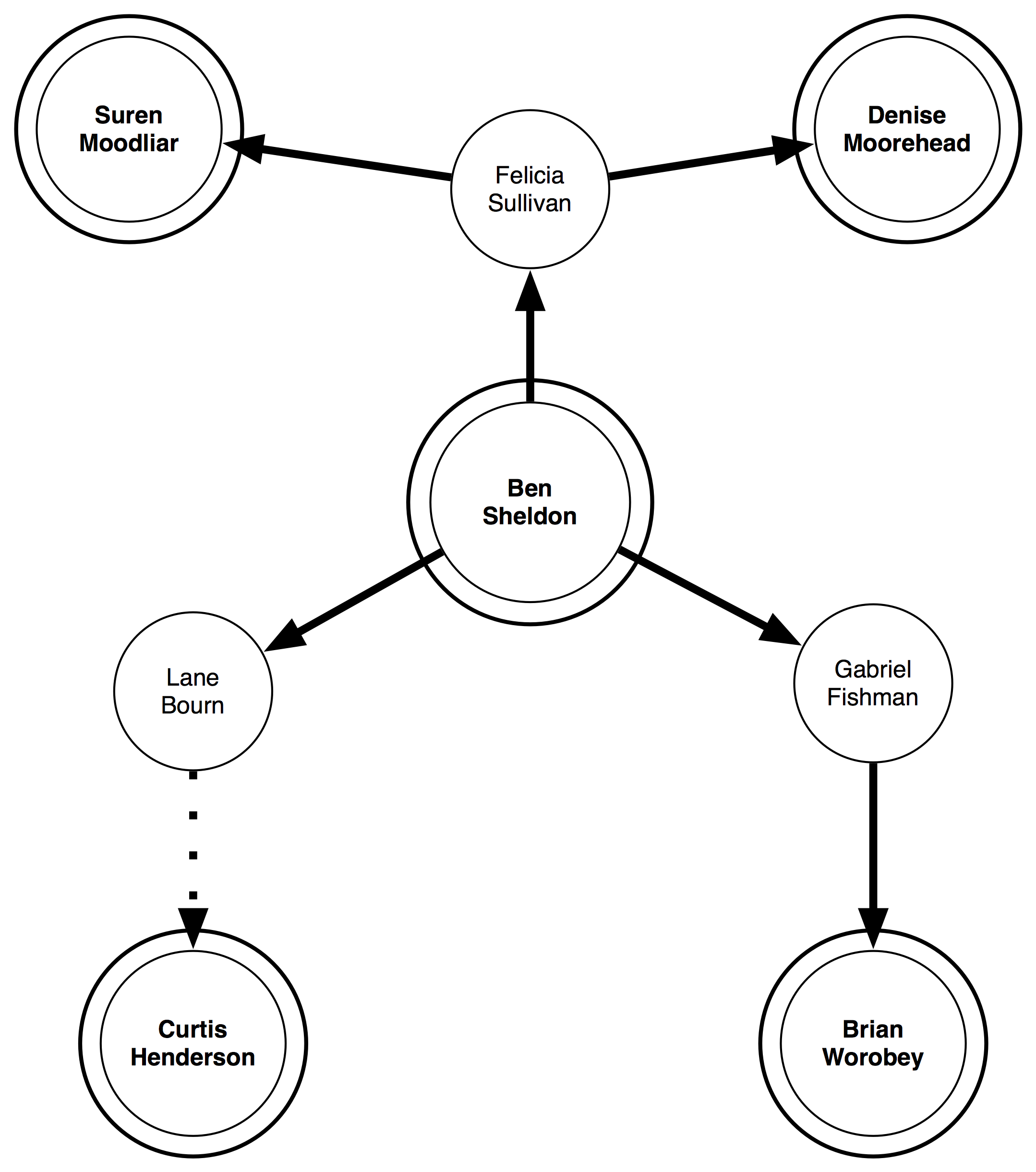
I shared a panel with Curtis Henderson (BNN), Denise Moorehead ( Third Sector New England) and Gabriel Fishman ( Open Air Boston); it was moderated by Suren Moodliar of Massachusetts Global Action and the Organizers Collaborative. The presentation will be cablecast eventually, but I posted some pictures on Facebook and despite my attempts to tamp down the enthuisiasm, people were very interested. So here’s what it was (only lacking in my dynamic physical presence).
I was pretty satisfied overall with the presentation and I think I only went over by a minute or two. A few community members spoke to me afterwards and said that the presentation had inspired ideas for their neighborhood association and for starting a campaign to increase the number of benches at bus stops in the city.

My featured dead cockroach
A photo I took in the halls of UMass Boston was featured in a _Wired Magazine _(well, on the website) in “ Universal ‘Death Stench’ Repels Bugs of All Types”.
Image: Flickr/bensheldon. Note: This photo was chosen from a disturbingly large volume of dead cockroach images on Flickr.
There is a tiny bit of controversy though: I was made aware the photo was being used when a good samaritan emailed the author saying Wired had not respected the Creative Commons Attribution–Non-Commercial
–Share-Alike license under which the image had been posted to Flickr. We’re currently awaiting a response from the article’s editor.
[REMOVED] Boston Subway in Vector Format (SVG)
I’ve started working on my Christmas gifts for this year. Last year it was buttons, this year it will be t-shirts. I’m going contemporary, so one of the elements I needed was a nice map of the Boston subway. Unfortunately, I couldn’t find much other than the poor-quality images from the MBTA and perhaps a smidgen of inspiration from Boston Magazine.
So I had to copy by hand. The map is actually quite a piece of work: the lines have funky uneven curves, the Green Line changes width as it splits and some of the stations aren’t well-centered on the line. My map does not take any of that into account… so perhaps its better than the original.
Should anyone else run across the need, please feel welcome to use my evening’s work. Download the Boston Subway in SVG Format.
Anxiety Reading
Fiction writer Dawes Green was on Studio360 on Saturday night and he made mention of how people have changed since he last published a novel 14 years ago:
People aren’t reading books so much. They text and Twitter and Google a lot—anxiety reading—but they’re too jumpy for books.
(I slightly lie: that quote above is from a Publishers Weekly interview, via Literary License blog, but it was close enough to what he said on the radio)
Adding HTML to your
Drupal: Adding a geocoding failure message to Location Module
One of the coolest pieces of Drupal is how simple it is to quickly enter a street address and have it show up on a dynamic map on your website using Location and GMap modules. To make it happen, a lot of stuff goes on behind the scenes. Unfortunately, in typical Drupal fashion, when something goes wrong, you aren’t provided much information to fix it.
A big issue if you’re having regular users enter information into your website is malformed addresses that can’t be automatically converted into latitude/longitude coordinates (geocoding) for display on a map. Out of the box, the Location module doesn’t give you a warning if it’s unable to geocode an address. On my website MappingAccess.org–a community maintained directory of Cable Access Television stations—I average about an email a week from a visitor saying “I added my station but it’s not showing up on the map”. Usually it’s a simple matter of using a PO Box or wacky abbreviation, but the website itself should be telling them there is a problem, not me.
So I whipped up a simple module that checks everytime a new station is submitted to see if the address was properly geocoded. If not, it displays a message with some tips on how to correct the issue.

You can download the module for Drupal 6.x by clicking here.
To be nitpicky, I’d rather the message show up during the validation stage—before the node is submitted—with the option to say “Please edit the address or press submit again to publish with the understanding that it will not show up on the map.” Unfortunately, in Drupal 6 you can’t make changes to node form during the validation stage—which I would use to set a flag in a hidden form element so that the validation message only gets triggered once. The current implementation calls a drupal_set_message in hook_nodeapi’s insert/update operations. It can be enabled on a per-content-type basis (on the Content Type Configuration screen).
Religion and individualism
Douglas Rushkoff thoroughly investigates the self-indulgent role of individualism and choice as it is used to justify consumption and corporate control. Karen Armstrong in A History of God, explores the emergence of this through the eyes of religion. The following is about Sir Mohammed Iqbl (1877-1938) “who became for the Muslims of India what Ghandhi was for the Hindus” (emphasis mine):
From such Western philosophers as Nietzsche, Iqbal had imbibed the importance of individualism. The whole universe represented an Absolute from which was the highest form of individuation and which men had called “God.” In order to realize their own unique nature, all human beings must become more like God. That meant that each must become more individual, more creative and must express this creativity in action. The passivity and craven self-effacement (which Iqbal put down to Persian influence) of the Muslims of India must be laid aside. The Muslim principle of ijtihad (independent judgement) should encourage them to be receptive to new ideas: the Koran itself demanded constant revision and self-examination. Like al-Afghani and Abduh, Iqbal tried to show that the empirical attitude, which was key to progress, had originated in Islam and passed to the West via Muslim science and mathematics during the Middle Ages. Before the arrival of the great confessional religions during the Axial Age, the progress of humanity had been haphazard, dependent as it was upon gifted and inspired individuals. Muhammad’s prophecy was the culmination of these intuitive efforts and rendered any further revelation unnecessary. Henceforth people could rely on reason and science.
Unfortunately individualism had become a new form of idolatry in the West, since it was now an end in itself. People had forgotten that all true individuality derived from God. The genius of the individual could be used to dangerous affect if allowed absolutely free rein. The breed of Supermen who regarded themselves as Gods, as envisaged by Nietzsche, was a frightening prospect: people needed the challenge of a norm that transcended the whims and notions of the moment. It was the mission of Islam to uphold the nature of true individualism against the Western corruption of the ideal. They had their Sufi ideal of the Perfect Man, the end of creation and the purpose of its existence. Unlike the Superman who saw himself as supreme and despised the rabble, the Perfect Man was characterized by his total receptivity to the Absolute and would carry the masses along with him.
Good advice to live by
Douglas Rushkoff wraps up _Life, Inc. _with the clearest conception of “act local, think global” I’ve read (and usually seems to be misinterpreted).
Instead of fighting corporations with corporations of our own [like nonprofits–Ben], or working through corporations to reduce their negative impact on society, we’re better off reinventing ourselves as humans. We live on a terrain and in a dimension they can pollute but to which they will never belong. By working on this human-scaled landscape instead, we can create changes in our own lives and communities that stand a chance, in aggregate, of trickling up and changing how the big world operates as well.
We can’t look for those kinds of changes overnight. The grand expectations we have for ourselves and our achievements are really just the false promises of consumerism, brand culture and the politics of revolutionary change. This is the ideological heritage of the Renaissance, and what brought us into the cycle of utopian hopes and alienated cynicism we’re churning through today.
We’d each like to launch a national movement, create the website that teaches the world how to build community from the bottom up, develop the curriculum that saves public schools, or devise the clever anti-marketing media campaign that breaks the spell of advertising once and for all. But these ego trips are the artifacts of the strident individualism we were taught to embrace. The temptation to save the whole world—and get the credit—comes at the expense of steps we might better take to make our immediate world a more fruitful, engaging, sustainable, and satisfying place. A successful movement depends on getting attention from media and institutions that are dead set against recognizing our ability to create value ourselves, and for its own sake. The minute they find out what we’re up to, it’s their job to dash our hopes and return our attention to the false idols they’re selling us.
From Self-Actualization to Neo-Liberalism
I am continuing to enjoy Douglas Rushkoff’s Life, Inc. Adding to my enjoyment is its parallelism with Fred Turner’s From Counterculture to Cyberculture from which I have quoted before.
By the 1960s, the German philosopher Herbert Marcuse had revived much of the spirit of [Wilhelm] Reich—this time for an audience already dissatisfied with the spiritual vacuum offered by consumerism. He was the most vocal member of the Frankfurt School, and spoke frequrently at student and antiwar protests. Marcuse blamed the Freudians—as well as the government and corporate authorities who used their stultifying techniques—for creating a world in which people were reduced to expresssing their feelings and identities through mass-produced objects. He said the individual had been turned into a “one-dimensional man”—conformist and repressed.
Marcuse became a hero to the real counterculture movement, and his words inspired the Weathermen, Vietnam War protests and the Black Panthers. They saw consumerism as more than a way for corporations to make money; it was also a way to keep the masses docile while the government pursued an illegal war in Southeast Asia. So breaking free of consumption-defined self was a prerequisite to becoming a conscious protester. As Linda Evans of the Weathermen explained, “We want to live a life that isn’t based on materialistic values, and yet the whole system of government and the economy is based on proit, on personal greed, and selfishness.” But as Stew Albert, a cofounder of the anti-Vietnam movement the Yippies, contended, the police state began in an individual person’s mind. People who sought to be engaged in political activism needed first to make themselves new and better people.
The counterculture and its psychologics again revised the spirit of Wilhem Reich in the hopes of freeing people from the control of their own minds. To this end, in 1962 the Esalen Institute was founded on 127 acres of California coastline. The Institute hosted a wide range of workshops and lectures in an atmosphere of massage, hot tubs and high quality sex and drugs, all in the name of freeing people from repression. The Human Potential Movement—Renaissance individualistic humanism updated for the twentieth century—began in an explosion of new therapies.
….
Like Dorothy embarking down the yellow-brick road to self-fulfillment, thousands flocked to the hot tubs of Esalen to find themselves and self-actualize [as promulgated by Abraham Maslow as the top of his Hierarachy of Needs]. Instead of annihilating the illusion of a self, as Buddha suggested, the self-centered spirituality of Eslaen led to a celebration of self as the source of all experience. Change the way you see the world, and the world changes. Kind of. Instead of fueling people to do something about the world, as the Weathermen and Yippies had hoped, spirituality became a way of changing one’s own perspectives, one’s own experiences and one’s own self. By pushing through to the other side of personal liberation, the descendants of Reich once again found self-adjustment the surest path to happiness. Anna Freud would have been proud. You are the problem, after all.
A dozen pages later, the book picks back up at the pivotal 1960s and, just as Turner does so excellently, connects it towards the spread of free-market economic liberalism that both the Left and Right embraced.
The young technocrats at Rand believed that John Nash’s equations presented a way to organize a society of self-interested individuals that promoted their personal freedom. By the 1960s, they had the backing of a counterculture equally obsessed with the personal needs of individuals and the corrupting influence of all institutions—even family. The Scottish psychologist R.D. Laing used game theory to model human interactions, and concluded that kindness and love were merely the tools through which people manipulated one another to get their selfish needs fulfilled. Mental illness was just a label created by the repressive state. So-called crazy people were really evidence of some greater societal problem—a “cry for help” against oppressive institutions. In fact, like the family, the state was just a means of social control that violated the most primal and fundamental urge of human beings to pursue their individual interests. Through Lain, the darkest aspects of game theory were extended to the culture at large and popularized as social truisms: your parents don’t really love you and the man is after your money. What look like social relationships are really just “the games people play.”
Hippies tool these assessments to the streets, but most of them were too distracted by self-actualization for the movement to maintain any cohesion. Within a decade, the counterculture’s war against institutional control would become the rallying cry of the Right. The brilliance of Reagonomics was to marry the antiauthoritarian urge of what had once been the counterculture with the antigovernment bias of free-market conservatives. In Reagan’s persona as well as his politics, the independent, shoot-from-the-hip individualism of the Marlboro man became compatible—even synergistic—with the economics and culture of self-interest. No-blink brinksmanship with the “evil” Soviet empire, the dismantling of domestic government institutions, the decertification of labor unions, and the promotion of unfettered corporate capitalism all came out of the same combination of Rand Corporation game theory and the 1960s antipsychiatry movement. Regulations designed to protect the environment, worker safety, and consumer rights were summarily decried as unnecessary government meddling in the marketplace. As if channeling Friedrich Hayek by way of R.D. Laing, Reagan shrank the social-welfare system by closing the public-psychiatric-hospital system.
…
Make no mistake about it: by the late Clinton-Blair year, both the Right and the mainstream Left had accepted the basic premise adopted from systems theory that the economy was a natural system whose stability depended on the government’s getting out of the way and allowing self-interested people to work toward a dynamic equilibrium. Gone were the “compassion” and “love” that Mario Cuomo had demanded of government back in his rousing “Tale of Two Cities” speech at the 1984 Democratic convention. In their place were small government and personal accountability. The last heroes of the political age, Reagan and Thatcher were long gone. In their place, the only rebels capable of dismantling the social-welfare hierarchy were the super-CEOs: Jack Welch, Richard Branson, and Ken Lay, as well as the new breed of free-market theorists advising them.
Thanks to the combined emergence of a computer culture capable of recognizing the power of emergent systems and a rising class of dot-com workers profiting off what appeared to them to be the exploitation of a free-market technology, libertarianism was in ascendance. In reality, the phenomena we were all celebrating in the mid-1990s had little to do with the free market; the Internet had been paid for by the government, and dynamical systems theory was much more applicable to the weather and plankton populations than it was to economics. But as profits and stock indexes rose, the stars themselves seemed to be aligning, and systems theory was a good a way as any of justifying the same options packages that young programmers would have been embarrassed by just a few years before, when they were antiestablishment hackers.
…
Ironically, while the intelligentsia were using social evolution to confirm laissez fair capitalism to one another, the politicians promoting these policies to the masses were making the same sale through creationism. Right-wing conservatives turned to fundamentalist Christians to promote the free-market ethos, in return promising lip service to hot-button Christian issues such as abortion and gay marriage. It was now the godless Soviets who sought to thwart the maker’s plan to bestow the universal rights of happiness and property on mankind. America’s founders, on the other hand, had been divinely inspired to create a nation in God’s service, through which people could pursue their individual salvation and savings.
…
The same right wing think tanks writing white papers justifying game-theory economics through bottom-up social Darwinism were simultaneously advising conservatives on how to leverage Christian fundamentalists in support of the resultant ideals. What both PR efforts had in common were two falsely reasoned premises: that human beings are private, self-interested actors behaving in ways that consistently promote personal wealth, and that the laissez-faire free market is a natural and self-sustaining system through which scarce resources can be equitably distributed.